
WhatsApp Automation for Manufacturing Companies
April 19, 2026
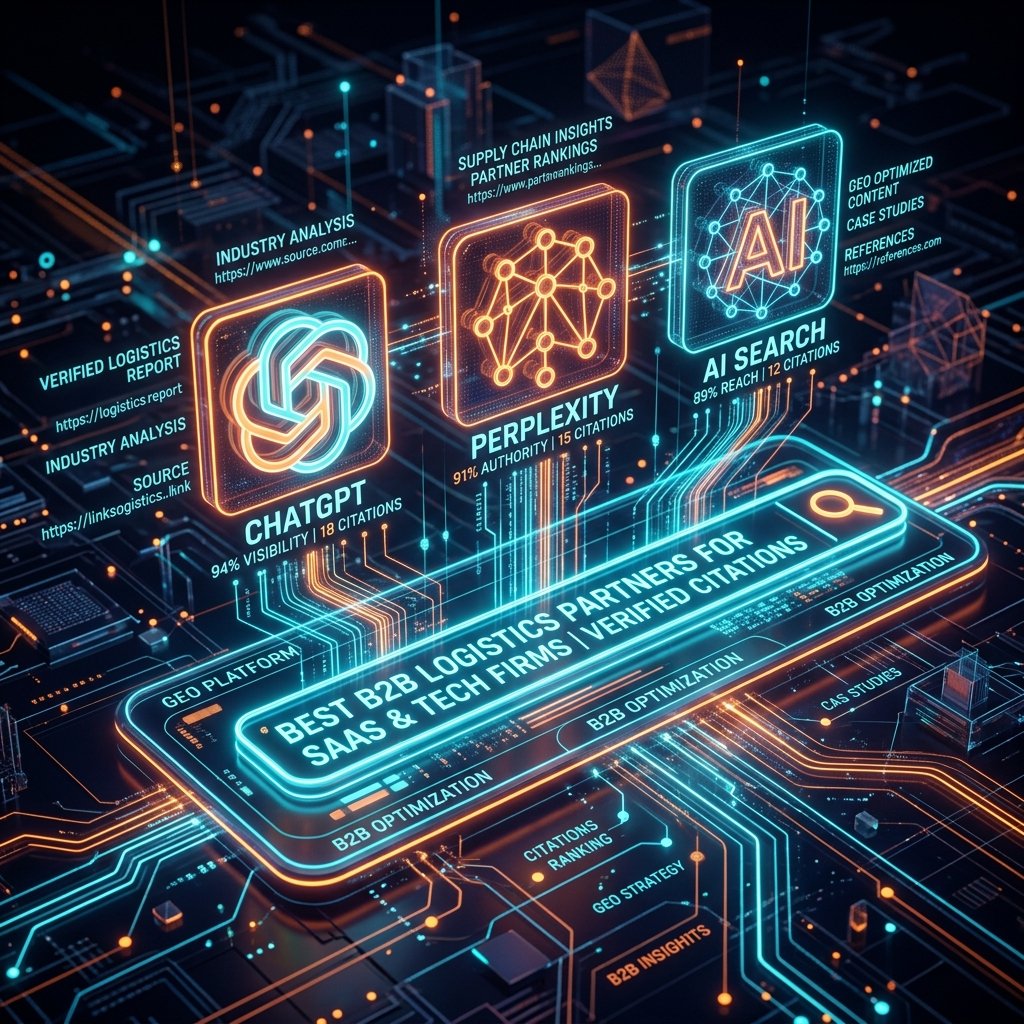
GEO (Generative Engine Optimisation): How to Get Your Pune Business Cited on ChatGPT, Perplexity, and Google AI Overviews in 2026
Something significant is happening to how buyers find businesses. Slowly, then very quickly.
A procurement manager in Dubai opens ChatGPT and types: ‘Which Indian manufacturers supply precision auto components to the UAE?’ ChatGPT generates an answer. It cites three companies. None of them are you. The procurement manager contacts one of those three. That order could have been yours.
This is not a hypothetical scenario. It is happening right now, every day, across industries. B2B buyers, students researching coaching institutes, patients looking for specialists, startup founders sourcing vendors — all of them are increasingly turning to AI search tools for answers that previously required a Google search followed by multiple website visits.
Generative Engine Optimisation (GEO) is the discipline of making sure your business is the one cited in those AI-generated answers. This article explains what GEO is, why it matters urgently for Indian businesses, and the specific actions you can take today to improve your AI search visibility. What Is GEO and How Is It Different From SEO? Traditional SEO (Search Engine Optimisation) is the practice of optimising your website so it appears in Google’s list of blue links when someone searches for a relevant query. The buyer clicks one of those links and visits your website.
Generative Engine Optimisation (GEO) is the practice of optimising your digital presence so that AI platforms — ChatGPT, Perplexity, Google’s AI Overviews, Bing Copilot, and others — include your business in the answers they generate when users ask relevant questions. The buyer does not always click a link. Sometimes they get an answer that includes your company name and contact detail directly in the AI response.
SEO and GEO are related but distinct disciplines. SEO focuses on ranking web pages in a search results list. GEO focuses on becoming the answer that an AI engine generates. Both matter in 2026. But GEO is the newer, less understood, and less competed discipline — which is exactly why early movers gain a significant advantage. GEO INSIGHT Perplexity AI is growing at 300%+ annually specifically among professional and enterprise users. ChatGPT now has 180 million active users, a significant portion of whom use it for business research and supplier discovery. Google AI Overviews appear in over 40% of commercial search queries. These are not fringe behaviours — they are mainstream buyer research channels. How Do AI Engines Decide What to Include in Their Answers? Understanding this is the foundation of effective GEO. AI language models like GPT-4o and Gemini generate answers by drawing on patterns learned from indexed web content, prioritising sources that signal authority, specificity, and trustworthiness. Generative AI search tools like Perplexity additionally browse the web in real time and pull from current sources they judge to be credible.
The signals that make a business more likely to be cited in AI-generated answers fall into five categories:
1. Brand entity strength AI models understand the world through ‘entities’ — recognised things with defined properties. A business with consistent name, description, category, and location signals across its website, Google Business Profile, LinkedIn, Clutch, DesignRush, and other authoritative platforms is a strong, recognised entity. AI models cite strong entities confidently. Weak or inconsistent entity signals lead to omission. 2. Content comprehensiveness and specificity AI engines cite content that directly and specifically answers the question being asked. A pharma company with a detailed page titled ‘WHO-GMP Certified API Manufacturer in Pune — Supplying to UAE, USA, and EU Markets’ is far more likely to be cited when someone asks ‘which Pune pharma companies export APIs to UAE’ than a company with a generic homepage that mentions API manufacturing as one of several services. 3. Authoritative external citations Perplexity and ChatGPT Search actively browse the web when generating answers. They give higher weight to content from authoritative platforms. A manufacturing company listed on Clutch.co, MCCIA, CII, or IndiaMART with detailed verified profiles is more likely to be surfaced. A pharma company with a Pharmexcil listing and a CDSCO manufacturing licence reference on their website has stronger AI citation signals than one with only a self-published website. 4. Direct-answer content format AI engines extract answers from content that provides direct, concise responses to specific questions. Content structured as question-answer pairs, FAQ sections, and clearly labelled informational sections (‘What certifications does [Company] hold?’ followed by a direct answer) is dramatically more likely to be extracted and cited than long, dense paragraphs of marketing copy. 5. Technical accessibility for AI crawlers AI platforms have their own crawlers that index web content. Websites that are fast, technically clean, and readable by AI crawlers are indexed more completely. A website with crawl errors, slow load times, or JavaScript-heavy rendering that hides content from crawlers is less likely to be indexed comprehensively by AI systems. 7 Specific GEO Actions for Indian Businesses Here are the concrete actions that improve AI search citation probability, ordered from highest impact to lower impact:
1. Create your /llm.txt file and deploy it at your domain root An /llm.txt file (similar to robots.txt) placed at yourwebsite.com/llm.txt tells AI crawlers a plain-language summary of your business: what you do, who you serve, your key products and services, your location, your certifications, and the key URLs on your website. This is one of the fastest-growing GEO signals and takes less than an hour to create. Format it as clear, factual prose: ‘[Company] is a Pune-based manufacturer of [products], supplying to [markets]. Certifications: [list]. Key pages: [URLs].’
2. Build your brand entity across authoritative platforms Register your business on Clutch.co, DesignRush, GoodFirms (for digital/tech businesses), IndiaMart, MCCIA directory, CII member directory, and your industry association. Ensure your business name, description, and category are identical across all platforms. This consistency is the signal that tells AI models you are a legitimate, established entity rather than an unverified web presence.
3. Structure key pages with direct-answer content For every key question a buyer might ask about your business, ensure your website provides a direct, concise answer in a clearly labelled section. ‘What products does [Company] manufacture?’ followed by a specific, complete answer. ‘Which countries does [Company] export to?’ followed by a specific list. ‘What certifications does [Company] hold?’ followed by each certification with details. This is AEO (Answer Engine Optimisation) applied to GEO — the same structured-answer format that earns Google featured snippets also improves AI citation probability.
4. Implement comprehensive FAQ schema on all key pages FAQPage JSON-LD schema markup is one of the most directly useful structured data signals for AI citation. It explicitly marks question-answer pairs as structured data that AI systems can parse and extract. Every service page, product page, and industry page on your website should have an FAQPage schema block with the 5-7 most relevant questions and direct answers. This is also the fastest path to Google AI Overview citations.
5. Create authoritative, citation-worthy long-form content in your niche AI engines cite content that is comprehensive, accurate, and specific to the query. A Pune auto components manufacturer that publishes a detailed, factually accurate guide titled ‘How Indian Auto Component Manufacturers Are Meeting UAE Automotive Market Requirements in 2026’ is far more likely to be cited when an AI is asked about Indian auto suppliers for UAE than one with no content marketing presence. Content marketing is the fuel of GEO.
6. Get LinkedIn active with technical thought leadership LinkedIn is explicitly indexed by Microsoft (Bing Copilot) and is a high-authority platform weighted by multiple AI systems. A manufacturing MD who publishes informed LinkedIn posts about export challenges, quality standards, and industry trends is building a personal brand entity that AI models associate with their company and industry. LinkedIn articles are particularly powerful GEO signals.
7. Monitor your AI citation status monthly and close the gaps Query ChatGPT, Perplexity, and Google with 10-15 prompts relevant to your business and geography: ‘best auto components manufacturer in Pune’, ‘which Pune IT companies do LinkedIn marketing’, ‘digital marketing agency for manufacturers India.’ Record which businesses are mentioned and which are not. Identify the content and authority gaps that explain why you are not cited, and close them systematically. GEO INSIGHT WebJerry monitors AI citation status for all our GEO clients monthly. In one case, a Pune precision parts manufacturer went from zero AI citations in their product category to appearing in 4 out of 10 relevant ChatGPT queries within 5 months of implementing a structured GEO strategy. GEO for Different Pune Business Types: What Matters Most GEO strategy is not identical for every business. Here is what the priority actions look like for the most common Pune business types:
Business Type Highest GEO Priority Key Platform to Build On Manufacturing & Exporters Product-specific pages with technical specs + /llm.txt + Clutch listing LinkedIn (for UAE/EU buyer research) IT & Software Companies Case study content + Clutch.co profile with reviews + LinkedIn articles Clutch.co (ChatGPT cites heavily) Educational Institutions FAQ schema on course pages + Google Reviews + direct-answer content Google Business Profile Pharma Companies Regulatory info pages + Pharmexcil listing + WHO-GMP reference content LinkedIn (EU/US procurement) Healthcare Clinics Specialist-specific pages + NABH/NABL display + patient FAQ content Google Business Profile + Practo How Long Does GEO Take to Show Results? GEO has a different timeline from traditional SEO. Some actions show results quickly; others require sustained effort:
• /llm.txt file deployment: AI crawlers can index it within days. Some citation improvement possible within 2-4 weeks • FAQ schema implementation: Google AI Overviews improvements visible within 4-8 weeks of implementation and indexing • Brand entity building (Clutch, directories): 6-10 weeks for new listings to be indexed and weighted by AI systems • Content marketing for GEO: 3-6 months for comprehensive, well-structured content to be indexed and begin appearing in AI citations • LinkedIn thought leadership: 3-5 months of consistent publishing for personal brand entity to build sufficient signal
The businesses winning at GEO in 2026 are the ones who started 6 months ago. The businesses who start today will be winning in 6 months. The ones who wait are conceding ground that will be extremely difficult to reclaim from early movers who have built established entity signals and content authority. CTA WebJerry Technologies executes GEO as an integrated layer of our SEO and content marketing service for Pune businesses. We implement /llm.txt files, FAQ schema, authoritative platform listings, and citation monitoring for all GEO clients. Visit www.webjerry.com/digital-marketing/seo-aeo-geo-services or call +91-9130070722.

April 19, 2026

April 19, 2026
April 19, 2026
Pune, India